Home / Spreadsheet
Mulebuy Spreadsheet shelves, with the detail to match on each one
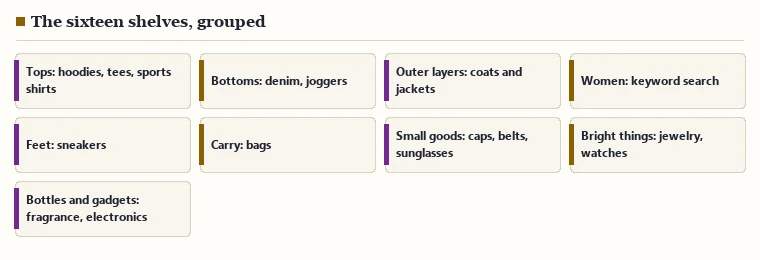
Sixteen shelves of the catalog. Each card says what usually moves the price on that shelf, so the comparables you collect are really comparable.
Reviewed October 20, 2026
How a catalog shelf is put together
A shelf in the Mulebuy Spreadsheet is a category page of product cards. The catalog sorts listings by what the item is (a hoodie, a pair of jeans, a cap), not by who sells it, and each card links to the seller’s own page on Taobao, Weidian or 1688. Prices show in Chinese yuan because that is what the seller charges; your agent converts them when you pay.
Shelves are wide on purpose. The hoodie shelf holds zip and pullover styles, fleece and terry linings, plain and printed fronts. That is handy for browsing and awkward for judging price, because a lined hoodie and an unlined one are different products that happen to share a photo style.
So before you compare, narrow the shelf in your head. The cards below name the one or two details that split each shelf into sets of real comparables.
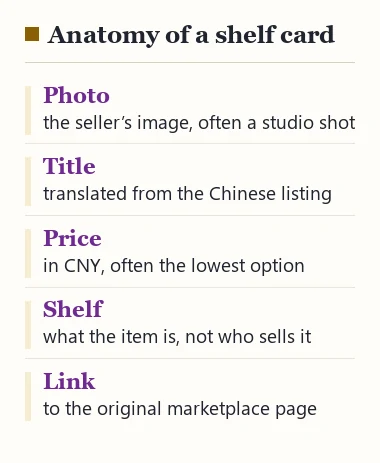
Every shelf in the catalog, each with its matching note
Every card opens that shelf of the catalog, except the women’s card, which opens a keyword search because the catalog has no single women’s category. The note on each card is the first thing to match when you gather comparables there.
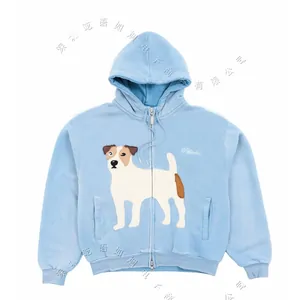
Hooded sweatshirts
Line hoodies up by construction before price: zip or pullover, brushed fleece or loopback terry inside, and the fabric weight if the seller states one in grams per square meter. A printed hoodie and a plain one from the same blank are fair comparables; a fleece-lined one and an unlined one are not.
Open this shelf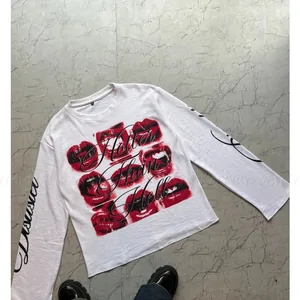
Tees
Tees look alike in thumbnails and differ in the fabric line. Match sleeve length, cotton content and whether the print is screen, puff or a heat transfer. Long-sleeve and short-sleeve tees share a shelf here, so split them before you run a price check.
Open this shelf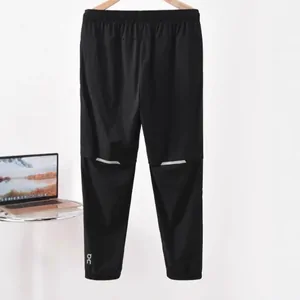
Joggers and sweatpants
Cuffed or open hem, fleece or terry, drawcord or plain waistband: those three choices decide most of a jogger price. Sellers often list a matching top on the same page; make sure the comparable price you copy is for the pants alone.
Open this shelf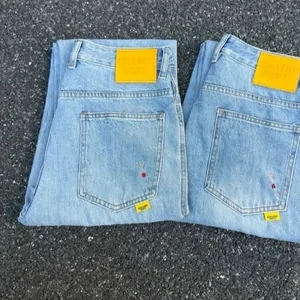
Denim
Denim comparables need the same fit and the same finish. A raw pair and a pair that has been washed, faded or ripped carry different labor costs, so treat them as separate sets. Check that the size chart gives waist and inseam in centimeters before you count a listing.
Open this shelf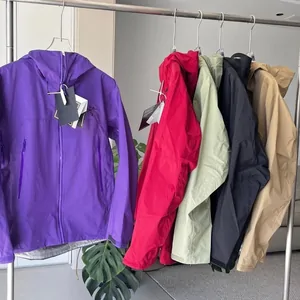
Coats and jackets
This is the widest shelf for price. Shell jackets, padded jackets and wool coats all sit here. Match the filling first (down, synthetic or none), then length, then hood. A comparable set that mixes a rain shell with a down parka will tell you nothing about either.
Open this shelf
Women’s search
This card opens a keyword search, not a single category, so the results mix knitwear, dresses, outerwear and accessories. Pick one garment type from the results and gather comparables inside that type only.
Open the search results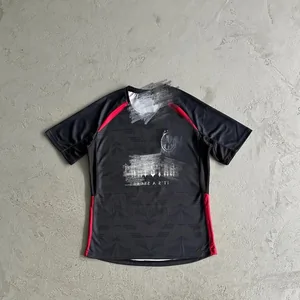
Sports shirts
Sports shirts vary with fabric, season and how the crest and numbers are applied: printed, stitched or heat-pressed. Compare shirts with the same application method, and read whether a name and number cost extra on the option menu.
Open this shelf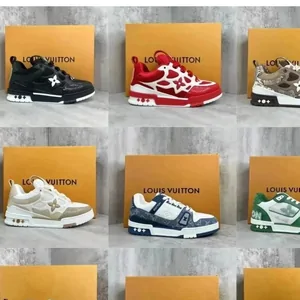
Sneakers
Shoe listings often bundle the box, spare laces and a dust bag, or sell them as options. Match upper material and what is in the package before you compare prices, and keep the size chart in millimeters of foot length next to the listing.
Open this shelf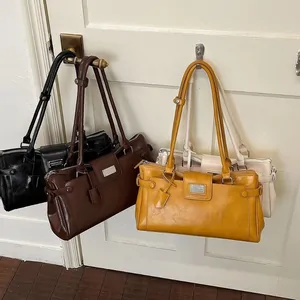
Bags
Bags compare by size and material: a canvas tote, a nylon crossbody and a leather shoulder bag are three different sets. Sellers usually give dimensions in centimeters; a listing without them is hard to use as a comparable.
Open this shelf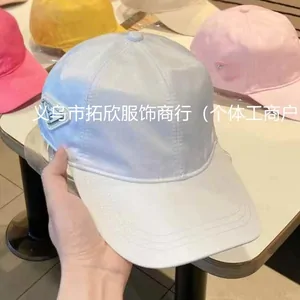
Caps and hats
For caps, match the back closure (strap, snap or fitted), the crown (structured or soft) and whether the front is embroidered or printed. Seasonal hats such as beanies and bucket hats share this shelf, so filter by type first.
Open this shelf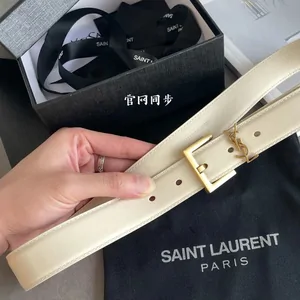
Belts
Strap material, strap width and the buckle decide a belt price. Widths are usually given in centimeters on the option menu, and the same listing may price each width differently.
Open this shelf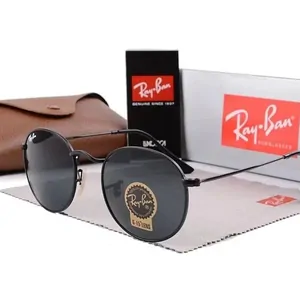
Sunglasses and frames
Frame material and lens type move the price. A listing that names its lens category or states polarized lenses is a different item from one that only says sun protection, so do not mix them in one comparable set.
Open this shelf
Fragrance
Compare the same bottle size: a 100 ml bottle and a 10 ml sample are not comparables. Liquids are also restricted on many shipping lines, so check what your agent allows before you add a bottle to a haul.
Open this shelf
Jewelry
Jewelry price follows the base metal and the plating. Listings that name the metal belong in one set; listings that only say silver color or gold color belong in another, because they describe the look and not the material.
Open this shelf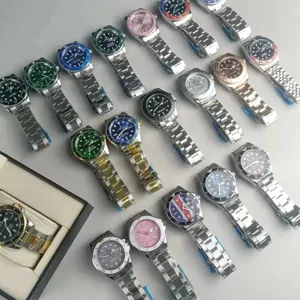
Watches
Watches compare by movement type, case material and strap. Many watches carry a battery, which limits the shipping lines that will take them, so read your agent’s battery rules before you place one in a set.
Open this shelf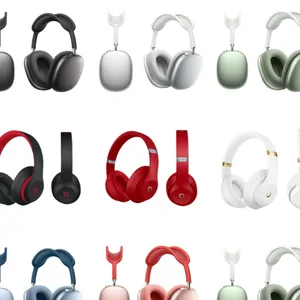
Electronics
For headphones, chargers and gadgets, the model number and the plug type matter more than the photos. Compare only listings that state the same model and capacity, and expect batteries to narrow the shipping options.
Open this shelf
Narrowing a shelf into a comparable set
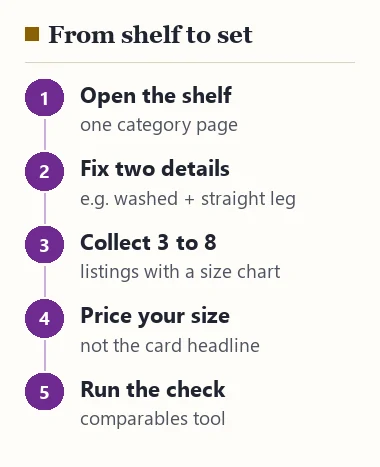
Take the denim shelf. Open it and you will see straight, wide and tapered legs, raw and washed finishes, men’s and women’s cuts. To compare a pair of washed straight-leg jeans, scroll until you have three to eight listings that are also washed and straight-leg, and that give a size chart in centimeters.
Write down each price for the size you would actually buy, not the headline price on the card. Sellers often price the smallest size or the plainest color lowest, and the card shows the lowest figure. If a listing hides its size chart or its fabric line, skip it: a comparable you cannot read is noise.
Three listings is the floor. Below that, a single odd price drags the middle around. Above eight, you are usually mixing in items that differ in some way you have not noticed.
Card prices usually show the lowest option on the menu
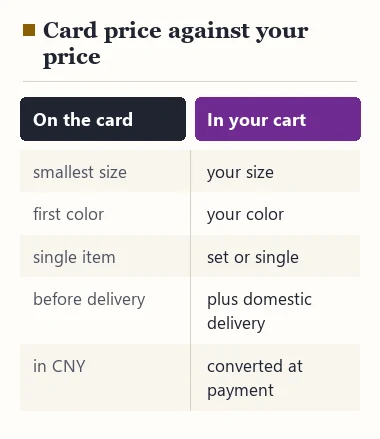
Chinese marketplace listings carry an option menu: sizes, colors, sometimes a choice between one item and a set. Each combination can have its own price. When a listing is copied into a catalog, the price shown is usually the lowest one on the menu, because that is the figure the marketplace itself displays first.
That matters twice. It can make a find look cheaper than the version you want, and it can make your comparables look cheaper too. When you collect prices, open each listing, pick the same size and color you would order, and copy that price. If a listing will not show a price for your size, note it as missing rather than guessing.
The before you pay page has more on option menus, including listings where one option is a different product altogether.
How the shelves stay current
Sellers change prices, sell out of sizes and take listings down. A card can outlive its listing by days or weeks. When you open a card and the marketplace page says the item is gone, that card is stale; treat any price you saw on it as history.
Stock counts are a second trap. Mulebuy’s own help pages warned in August 2026 that the stock a seller shows online is not reliable, and that the agent’s check with the seller decides whether an item is really available. Other agents work the same way. A find with a healthy stock number can still come back as out of stock after you pay, and the agent then returns the item price, usually to your account balance.
We check the sixteen shelf links on this page whenever we review the site; the review date is at the top of each page.